
Yam: what it is, how it differs from sweet potato and how to cook it
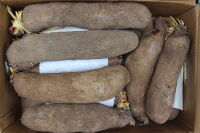
Yam is a large, starchy tuber of plants of the genus Dioscorea, grown mainly in West Africa, Asia and the Caribbean. It has a thick, rough skin and white, cream or purple flesh. Yam is eaten only cooked: boiled, fried or roasted, like potatoes. In Polish it is called "pochrzyn".
What yam is
Yam is the tuber of a climbing plant. There are many varieties, which differ in size, shape and colour. Some tubers are small, others very large and heavy. The skin is brown and rough, sometimes like tree bark. The flesh is dense and moist; when cooked it turns floury and slightly sweet, but much less sweet than sweet potato.
In the kitchen, yam plays much the same part as the potato does in Poland. In West Africa, for example in Nigeria and Ghana, it is boiled, fried and pounded into a smooth mass (pounded yam), eaten with thick soups and stews. In the Philippines, the purple variety is made into a sweet paste, ube halaya.
Yam vs sweet potato: not the same thing
In the United States, sweet potatoes are often called "yams". This causes many mix-ups, because sweet potato and yam are completely different plants. On Polish shelves, sweet potato is "batat" or "słodki ziemniak", and yam is "pochrzyn" or simply "yam".
| Yam (pochrzyn) | Sweet potato (batat) | |
|---|---|---|
| Plant | Dioscorea | Ipomoea batatas |
| Skin | thick, rough, brown | thin, smooth, pink or orange |
| Flesh | white, cream or purple, drier | usually orange, moist |
| Taste | mild, not very sweet | clearly sweet |
| Raw | no | usually boiled or roasted |
If an American recipe says "yams" and means sweet, orange tubers, buy sweet potatoes. If the recipe is African or Caribbean, it means true yam.
Purple yam and wild yam
Purple yam or winged yam (Dioscorea alata; Polish "pochrzyn skrzydlaty") has a stem with small "wings". Its tubers often have purple flesh. Filipino ube comes from it.
Wild yam (Polish "pochrzyn dziki") is the name under which tubers of wild-growing species are sold. Not every wild species is edible. Buy wild yam only as a food product, prepare it as the seller describes, always peel it and cook it thoroughly.
How to prepare yam
Always boil, fry or roast yam. Do not eat it raw.
- Peeling. The juice under the skin irritates some people's hands. Peel yam in gloves. Cut off the ends, then remove the thick skin with a knife, not a peeler.
- Cutting. Cut the flesh into cubes or slices. Put the pieces straight into cold water, because they darken in the air.
- Boiling. Boil in salted water until soft, usually 15–25 minutes depending on the size of the pieces. Test with a knife, as you would potatoes.
- Next: serve boiled yam with butter and salt, mash it, slice and fry it, or add it to a stew.
A simple idea: yam chips. Cut peeled yam into sticks, parboil for 8–10 minutes in salted water, dry them and deep-fry until golden. Sprinkle with salt and hot paprika. In West Africa, fried yam is often eaten with a spicy tomato sauce.
Store unpeeled yam in a cool, dry, dark place, like potatoes, but not in the fridge. Keep cooked yam in the fridge and eat it within 2–3 days.
Where to buy yam
Yam is on the fresh yam root (pochrzyn) page. There is also wild yam, fresh root, and for comparison sweet potatoes. Little India has shops in Warsaw, Kraków, Wrocław and Gdańsk and ships online orders.
FAQ
What is yam called in Polish?
Yam is "pochrzyn" in Polish. Do not confuse it with sweet potato ("batat"), which is also sometimes called "yam" in the US.
Can you eat yam raw?
No. Yam is always boiled, fried or roasted, as it is in the African and Asian cooking it comes from.
What can I use instead of yam in a recipe?
The closest are floury potatoes or taro. Sweet potatoes will be much sweeter and softer.
How long does yam take to boil?
Pieces the size of a dice usually take 15–25 minutes. They are done when a knife goes in without resistance.
Other starchy tubers that must be cooked are in our guides to cassava and taro.