
Taro root (arbi, colocasia): what it is and how to cook it safely
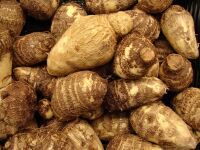
Taro root is the tuber of the plant Colocasia esculenta, called arbi in India and coco yam, eddo or dasheen in Africa and the Caribbean. It has a brown, hairy skin and white or cream flesh with a mild, slightly nutty taste, close to potato. Taro must always be cooked: raw, it is not edible, because it irritates the mouth and throat. In Polish it is sold as taro, korzeń taro or kolokazja jadalna.
What taro is
Taro has been grown for a very long time in tropical Asia, the Pacific islands and Africa. You will find two kinds of tuber in the shops: small oval tubers about the size of an egg, which Indian cooks call arbi, and large tubers, often sold in pieces. The leaves and stalks of the plant are edible too, but also only after cooking.
Cooked taro is creamy and a little sticky. You can sometimes see purple specks in the flesh. The taste is gentle, so taro takes on spices and sauces well.
Taro in Polish
| English | Polish | Indian shops |
|---|---|---|
| taro root | taro, korzeń taro, bulwy taro | arbi |
| the taro plant | kolokazja jadalna | colocasia |
| taro leaves | liście kolokazji | colocasia leaves, for patra |
| yam | pochrzyn (a different plant) | yam |
Taro and yam are often mixed up, but they are different plants. Both are starchy and both are cooked before eating.
Safety: why taro must be cooked
Raw taro contains tiny crystals of calcium oxalate. They irritate the mouth, tongue and throat and cause a burning, itching feeling. Boiling, baking, or frying after boiling makes taro safe to eat.
The rules are simple:
- Never eat taro raw and do not taste the raw flesh.
- The juice from the skin and raw flesh can irritate the skin of your hands. Peel taro in gloves or rub your hands with oil first.
- The easiest way is to boil the tubers in their skins and peel them once they have cooled.
- Cook taro until fully soft. Undercooked taro can still scratch the throat.
How to cook taro step by step
- Wash the tubers under running water and scrub off the soil with a brush.
- Put them in a pan, cover with water and add a little salt.
- Boil until a knife goes in with no resistance. Small arbi tubers are usually ready in about 15 to 20 minutes; large pieces need longer.
- Drain and let the tubers cool.
- Pull off the skin with your fingers or a knife. After cooking it comes off easily.
- Now you can slice the taro and fry it, bake it or add it to a sauce.
Taro in Indian cooking and around the world
Arbi masala or arbi fry. Boiled and peeled arbi is flattened or sliced, then fried in oil with ajwain, turmeric, chilli, ground coriander and amchur (dried mango powder). Finish with fresh coriander. It is a popular dry dish served with roti and dal.
Arbi in gravy. In North India, arbi is also cooked in a yoghurt or tomato and onion sauce.
Patra (alu vadi). In Gujarat and Maharashtra, colocasia leaves are spread with a paste of gram flour and spices, rolled up, steamed, sliced and then pan-fried.
Asia and the Pacific. In China taro goes into braised meat and desserts; in Japan small satoimo tubers are simmered in broth. The purple "taro" colour of bubble tea often comes from flavouring or colouring rather than from taro itself. In Hawaii cooked taro is pounded into poi.
West Africa. Cooked coco yam is made into fufu and thick soups.
What to use instead of taro
Potato is the closest, but it is less sticky. In a curry you can use potatoes or sweet potatoes. In African and Caribbean cooking, taro is often replaced with yam or cassava. Cassava, too, must always be cooked.
How to store taro
Keep raw tubers in a cool, dry, dark place, but not in the fridge, and use them within a week. Keep cooked taro in a closed container in the fridge for a day or two. Cooked and peeled pieces can also be frozen.
Where to buy taro root in Poland
Little India sells fresh taro as arbi, taro root, coco yam, 500 g and in a smaller 250 g pack. There are also ready-cut taro mixed chunks from Nepali Mato. Little India has shops in Warsaw, Kraków, Wrocław and Gdańsk and ships orders across Poland.
Other tropical tubers are covered in our guides to cassava and yam.
FAQ
What is taro root?
Taro root is the starchy tuber of the colocasia plant, called arbi in Hindi. You cook it like potatoes, but it is creamier and a little sticky.
Can you eat taro raw?
No. Raw taro irritates the mouth and throat, so it must always be cooked until soft.
What is taro called in Polish?
Taro or korzeń taro; the plant is kolokazja jadalna. Indian shops in Poland also sell it as arbi.
Is taro root the same as yam?
No. Taro is the tuber of colocasia, and yam (pochrzyn in Polish) is the tuber of a different plant. Both are starchy, and in some countries the names get mixed up.