
Roti, chapati and naan: the difference, and how to make chapati at home
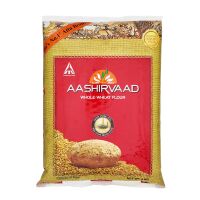
Chapati and roti are thin, round flatbreads made from wholewheat atta flour, water and salt, cooked without fat in a dry pan. In North India the two names mean, in practice, the same everyday bread. Naan is something else: a soft bread of white flour with yeast or yoghurt, baked in a tandoor oven. For chapati in Poland you need atta, which Polish shops sell as "mąka atta" or "mąka pszenna razowa" (wholewheat flour), usually with "chapatti flour" on the pack.
Roti, chapati, phulka: the words
Roti is the general Hindi word for flatbread. Chapati is the most common kind of roti: a thin bread of atta, kneaded without yeast and cooked on a flat pan called a tawa. Phulka is a chapati that is finished over an open flame until it puffs up like a balloon.
In India chapati is eaten every day, instead of rice or next to it. You tear off a piece and use it to scoop up dal, curry or vegetables, usually with your hand.
Chapati vs naan
| Chapati / roti | Naan | |
|---|---|---|
| Flour | wholewheat atta | white wheat flour (maida) |
| Raising agent | none | yeast, yoghurt or baking powder |
| Cooking | dry tawa pan | wall of a tandoor oven |
| Shape and thickness | round, thin | oval or teardrop, thicker, soft |
| When | every day, at home | more often in restaurants |
Paratha is another bread again: the same atta, but layered and fried with ghee, often with a filling. See aloo paratha and lachha paratha. How a tandoor works is in tandoori without a tandoor.
Atta flour in Poland
Atta is finely ground wholewheat flour, traditionally milled in a stone mill (chakki). It is finer than Polish wholemeal flour ("mąka razowa" or "mąka pełnoziarnista") and absorbs more water, so the dough is soft and stretchy.
Polish wholemeal flour gives harder, more brittle breads. If you cannot get atta, mix fine wholemeal flour half and half with Polish wheat flour type 650 ("mąka pszenna typ 650"). The breads will be close, but not the same.
Chapati recipe
Ingredients (8 chapatis):
- 250 g atta, plus a little for dusting
- about 170 ml warm water
- ½ teaspoon salt
- 1 teaspoon oil (optional)
- ghee or butter for brushing
Method:
- Mix the flour with the salt. Add the water a little at a time and knead by hand until you have a soft, slightly sticky dough. Add the oil.
- Knead for 5 to 8 minutes, until smooth. Cover with a damp cloth and leave for 20 to 30 minutes.
- Divide the dough into 8 balls. Flatten each one, dip it in flour and roll it out into a thin round of about 15 to 18 cm.
- Heat a dry frying pan or tawa over a medium-high heat.
- Put a chapati in the pan. When small bubbles appear on top (after about 30 seconds), turn it over.
- Cook the second side until brown spots appear. Turn it again and press the edges lightly with a folded cloth. The chapati should puff up.
- Take it off the heat, brush it with ghee and keep it in a basket wrapped in a cloth so it does not dry out.
On a gas hob, instead of pressing at step 6, you can hold the chapati with tongs directly over the flame for a few seconds. That is how a phulka is made.
Where to buy atta in Poland
Little India sells chapati flour such as Elephant Atta 10 kg and Aashirvaad Atta 5 kg, as well as a wooden chapati rolling pin (belan) and a Prestige tawa. Little India has shops in Warsaw, Kraków, Wrocław and Gdańsk and ships orders across Poland.
FAQ
Are roti and chapati the same?
In practice, yes. Roti is the general word for flatbread, and chapati is its most common type, made from atta and cooked in a dry pan.
Why doesn't my chapati puff up?
The usual reasons are a dough that is too stiff, too short a rest, uneven rolling or a pan that is not hot enough.
Can I make chapati with rice flour?
No, chapati is made from wheat atta. Rice flour, such as Anil kozhukattai flour, is for other South Indian dishes, such as kozhukattai, steamed dumplings.
How do I store atta?
In an airtight container in a cool, dry place. With a large bag such as 10 kg, keep part of it in a smaller container for daily use.