
Raksha Bandhan: the rakhi festival, and how to mark it in Poland
Raksha Bandhan (also written Raksha Bandan, or simply called Rakhi) is the Indian festival of brothers and sisters. A sister ties a decorated thread or bracelet called a rakhi on her brother's wrist, and he promises to stand by her and gives her a gift. It falls on the full-moon day of the Hindu month of Shravan, usually in August.
What Raksha Bandhan means
The name comes from Hindi and Sanskrit. "Raksha" means protection and "bandhan" means a bond or a tie. The rakhi is a sign of the bond between siblings and of the brother's promise to be there for his sister in hard times.
The festival is most widely kept in North and West India, and in Nepal, where the same full-moon day is called Janai Purnima. Today it has many forms. Cousins tie rakhis on each other, sisters tie them on each other, and a girl may tie a rakhi on a close friend she thinks of as a brother.
What happens on the day
In the morning the family meets, often for a meal together. The ceremony itself is short and usually goes like this:
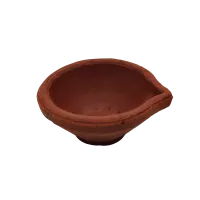
- The sister prepares a plate (thali) with the rakhi, kumkum or tilak powder, a few grains of rice, sweets and a small diya lamp.
- She marks a tilak on her brother's forehead and presses a few grains of rice onto it.
- She circles the lamp in front of him, which is the aarti.
- She ties the rakhi on his right wrist.
- She feeds him a sweet, and he gives her a present or money and makes his promise.
In some families the sister fasts until the ceremony. Afterwards everyone sits down to a festive meal.
What a rakhi is
A rakhi is a thread or bracelet tied on the wrist. The simplest is a red-and-yellow thread called mauli. Shop rakhis have a decorated centre of beads, sequins, small stones or a figure, fixed to a coloured cord. There are rakhis with cartoon characters for children, and hanging rakhis for a sister-in-law (bhabhi), called lumba, which are attached to her bangle.
A rakhi is usually worn for a few days after the festival, or until it falls off by itself.
Raksha Bandhan in Poland
Many people from India and Nepal live in Poland far from their brothers and sisters. Sisters then send the rakhi by post and do the ceremony over a video call. Post abroad is slow, so send the rakhi well ahead of the day. If you have a brother here, a rakhi bought in Poland saves the wait.
Polish friends and partners are often invited too. If you are given a rakhi, accept it with a smile and say thank you; a box of sweets is enough as a small gift in return.
Indian sweets such as kaju katli, laddoo and gulab jamun belong to the day; see our guide to Indian sweets. In autumn comes Diwali; read how to celebrate Diwali 2026 in Poland.
Where to buy a rakhi in Poland
Little India sells rakhi bracelets in several designs, for example rakhi design 10 or rakhi design 1. For the thali you can also get kumkum and small clay diya lamps. On Polish labels a rakhi is "bransoletka rakhi". Little India has shops in Warsaw, Kraków, Wrocław and Gdańsk (addresses) and ships orders across Poland. Check which designs are available on the product page.
FAQ
When is Raksha Bandhan?
On the full-moon day of the Hindu month of Shravan, usually in August. The date changes every year, so check it in a Hindu calendar.
Which wrist is the rakhi tied on?
Usually the right wrist. The sister ties it firmly so it does not slip off during the day.
Can someone who is not a brother wear a rakhi?
Yes. Today rakhis are also tied on cousins and close friends, and sisters tie them on each other.
Raksha Bandan or Raksha Bandhan: which spelling is right?
"Raksha Bandhan" is the standard transliteration. "Raksha Bandan" and "Rakhi" are common spellings in searches and mean the same festival.