
Guava fruit (amrud, amarud): what it tastes like and how to eat it
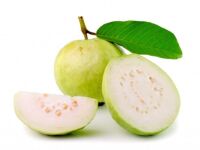
Guava is a tropical fruit the size of a large egg or an apple, with a green or yellowish skin and white or pink flesh. In India it is called amrud (often spelt amarud on packs), and in Polish guawa. It tastes like a mix of pear, strawberry and citrus, and a ripe guava smells so strong that you notice it across the kitchen. You eat it raw, skin and all, or make it into juice, jam and a firm paste.
What guava is
Guava is the fruit of the tree Psidium guajava, from the myrtle family. It comes from tropical America but now grows in many warm countries, including India, where it is a popular seasonal fruit. That is why you will see several names in shops: guava, guawa (Polish), amrud or amarud (Hindi), guayaba (Spanish) and goiaba (Portuguese).
Inside a guava there are many small, hard seeds. They are edible but hard, so many people cut out the centre or press the flesh through a sieve when making juice or purée.
What guava tastes like
The taste depends on the variety and on how ripe the fruit is:
- Firm, green guava is crunchy, slightly astringent and less sweet. In India it is often eaten like this, with salt and chilli.
- Ripe, soft guava is sweet, juicy and very fragrant. The flesh feels somewhere between a pear and a ripe mango.
- Pink-fleshed varieties usually smell stronger and are a little sweeter than white-fleshed ones.
How to eat guava
The simplest way: wash the fruit, cut off the ends and cut it into quarters or slices. The skin is thin and edible, so there is no need to peel it.
A few ways worth knowing:
- The Indian way. Cut a firmer guava into eighths and sprinkle with salt, chilli powder or chaat masala. This is how street sellers in India sell it.
- In a fruit salad. Ripe guava goes well with mango, pineapple and lime.
- As juice or a smoothie. Blend the flesh with water, press it through a sieve and sweeten to taste.
- With cheese. In Brazil, guava paste (goiabada) is served with white cheese, a simple mix of sweet and salty.
Guava in the kitchen: preserves and drinks
Guava is high in natural pectin, so it sets well. That is why Latin America and the Caribbean make guava jams, jellies and a firm paste that is cut into slices. In Brazil this paste is goiabada; in Colombia, bocadillo, usually wrapped in leaves or foil.
In India and Southeast Asia, a thick guava nectar is popular, often with a little salt and chilli. Guava is also made into chutney: the flesh is simmered with sugar, vinegar, ginger and cumin.
To make a simple guava purée at home:
- Cut up 4 ripe guavas, add a little water and simmer for 10 minutes.
- Press the flesh through a sieve to remove the seeds.
- Sweeten to taste and add a few drops of lime juice.
The purée goes well with yoghurt, porridge, pancakes and ice cream.
How to choose and store guava
A ripe guava gives slightly when pressed, its skin turns from green to yellowish, and it smells clearly. A hard, fully green guava will ripen in a few days at room temperature. Once ripe, move it to the fridge and eat it within a few days, because it softens quickly. Do not buy fruit with dark, sunken spots.
Where to buy guava in Poland
Little India sells fresh guava (amarud), also in a 500 g pack. When there is no fresh guava, there is Predilecta goiabada guava paste and Rubicon guava drink. Little India has shops in Warsaw, Kraków, Wrocław and Gdańsk and ships orders across Poland.
If you like tropical fruit, read about plantain and green and ripe papaya too.
FAQ
Do you eat guava with the skin?
Yes. Guava skin is thin and edible. Just wash the fruit and cut off the ends.
Are guava seeds edible?
Yes, but they are hard. You can eat them with the flesh or cut out the centre if they bother you.
What is amrud?
Amrud (amarud) is the Hindi name for guava. Packs in Indian shops often carry both names, guava and amarud.
What is guava called in Polish?
Guawa. Some Polish labels keep the English name guava.