
Chayote (chow chow): what it is and how to cook it
Chayote (Sechium edule) is a pale green, pear-shaped vegetable from the gourd family. In South India it is called chow chow, and in Polish kolczoch jadalny. It has crisp flesh and a very mild taste, somewhere between cucumber and courgette. You can boil, braise or stir-fry it, and young ones can be eaten raw.
One vegetable, many names
Chayote comes from Central America and Mexico. Today it grows in many warm countries: Latin America, the Caribbean, Asia and India. That is why it has so many names:
- chayote: Mexico and English;
- chow chow: South India;
- iskus: Nepal;
- chuchu: Brazil;
- christophene: the Caribbean;
- kolczoch jadalny: Polish, from "kolec" (spine), because some varieties have small spines.
If you ask for chow chow in a Polish shop, staff may not know the word, so use "chayote" or "kolczoch".
What chayote looks and tastes like
The fruit is about the size of a large fist, with grooves in the skin. Some varieties have small spines. Inside there is one flat, soft seed, which can also be eaten in young fruit.
The taste is delicate, slightly sweet and watery. Chayote does not take over a dish: it soaks up the spices, sauce and fat around it. Cooked briefly, it stays slightly crunchy. It works anywhere you would use courgette, kohlrabi or cucumber for cooking.
How to peel and prepare chayote
- Wash the fruit. When you peel it, the skin releases a sticky sap that can leave a dry, tight film on your hands. Wear gloves or peel it under running water.
- Peel the skin with a vegetable peeler. Very young fruit can stay unpeeled.
- Cut it in half lengthways and remove the seed if it is hard.
- Cut into cubes, slices or batons, depending on the dish.
How to cook chayote: ideas
- Kootu: a South Indian dish of chow chow cubes cooked with moong dal or toor dal, coconut and cumin. More on dals in types of dal.
- Poriyal: chayote stir-fried with mustard seeds, curry leaves and grated coconut. See our post on fresh curry leaves.
- In sambar: chayote cubes hold their shape well in a thick toor dal sauce.
- Nepali style: iskus braised with potatoes, turmeric and chilli.
- Mexican style: boiled and served with butter, salt and lime, or baked with cheese.
- Raw: young chayote, finely sliced, in a salad with lime and chilli.
- In Polish cooking: in a vegetable soup, in leczo instead of courgette, or braised with dill.
Chayote cooks fast: 1.5 cm cubes are tender in about 10 to 15 minutes.
A simple poriyal for 2: heat a tablespoon of oil, add a teaspoon of mustard seeds and wait until they pop. Add a few curry leaves, a dried chilli and 2 chayotes cut into small cubes. Add salt and a pinch of turmeric and cook covered for 8 to 10 minutes. Finally stir in 2 tablespoons of grated coconut.
How to store chayote
Keep chayote unwashed in the vegetable drawer of the fridge. In good conditions it keeps from a week to several weeks. Peeled and cut chayote should be eaten within 1 or 2 days.
Where to buy chayote in Poland
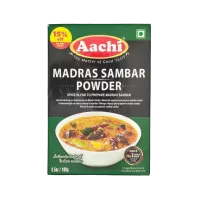
Chayote is a fresh vegetable that comes and goes with deliveries, and it is not always listed in the online shop. Look for it in the fresh vegetables category or ask in one of the shops. Other fresh gourds for Indian cooking are listed there too, such as fresh bitter gourd (karela), which tastes very different: bitter rather than mild. For sambar you will also need a spice mix such as Madras sambar powder Aachi. Little India has shops in Warsaw, Kraków, Wrocław and Gdańsk and ships orders online.
FAQ
What is chow chow vegetable in English?
Chayote. Chow chow is the South Indian name for the same vegetable; in Polish it is kolczoch jadalny.
Can you eat chayote raw?
Yes, young fruit is good raw, in thin slices in salads. Older, firmer fruit is better cooked.
What can I use instead of chayote?
Courgette (cukinia), kohlrabi (kalarepa) or cucumber for cooking. Courgette is closest in taste but cooks faster and goes softer.
Do you need to peel chayote?
Usually yes, because the skin of older fruit is tough. Very young fruit can be eaten with the skin.