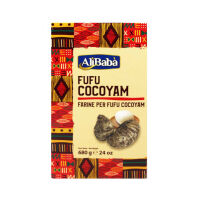
AliBaba Cocoyam Fufu Flour 680g is a mix intended for preparing traditional fufu from cocoyam, a popular starchy dish consumed in many countries of West and Central Africa. Fufu is one of the most characteristic side dishes in African cuisine and is an important element of everyday cooking in countries such as Ghana, Nigeria, Cameroon, and other nations in the region. Traditionally, it is made from various starch-rich raw materials such as cassava, yam, plantains, or cocoyam, with the choice of ingredients depending on local culinary customs and product availability. Cocoyam, referred to in Polish as kokojam, is a name used for edible tubers of plants from the Araceae family, primarily taro and related species cultivated in tropical regions. Cocoyam tubers contain starch and are used to prepare cooked, mashed, and dried food products. In African cuisine, cocoyam is valued for its distinctive texture and the ability to prepare smooth, elastic dishes that serve as an accompaniment to soups and sauces. AliBaba Cocoyam Fufu Flour allows you to prepare fufu without the need to peel, cook, and mash fresh tubers yourself. The product in dry mix form is convenient for storage and enables preparing portions adjusted to the number of people. The exact composition of the mix, including the percentage content of cocoyam and the possible presence of other flours or starches, requires confirmation on the current producer's label. One should not assume that the product consists solely of cocoyam without checking the ingredient list. Fufu is distinguished by its characteristic thick and elastic consistency, which sets it apart from classic mashed potatoes, groats, or cooked rice. Properly prepared dough should be sufficiently compact, uniform, and moldable, yet soft enough to be comfortably eaten with soups and sauces. The consistency of the finished fufu depends on the type of flour used, the water ratio, temperature, and mixing method. In traditional African cuisine, fufu is often prepared by prolonged pounding of cooked ingredients in a large mortar until a smooth, elastic mass is obtained. Ready-made flour mixes are a modern alternative to this labor-intensive method and allow preparing a similar type of starchy side dish at home. When preparing fufu from flour, the product should be gradually combined with the appropriate amount of water and heated according to the manufacturer's instructions, stirring vigorously to minimize lump formation. Depending on the recipe, the mix can be added to hot water or prepared in another way indicated on the packaging. It is important to follow the recommended proportions, as too much water can make the dough too runny, while too little liquid can cause excessive hardness and difficulties during mixing. During cooking, the dough gradually thickens, so it is best to use a sturdy wooden spoon or another utensil designed for stirring thick dishes. The finished fufu can be shaped into a ball or oval portion and served immediately after preparation. In many West African countries, the traditional way of eating fufu is to tear off small pieces with the hand and dip them into soup or sauce. Fufu then serves as a starchy side that allows consuming intensely seasoned dishes without the need for bread or rice. One of the best-known combinations is fufu with egusi soup, a thick soup made from ground seeds of cucurbit plants, leafy vegetables, spices, and meat or fish, depending on the regional recipe. The delicate taste of fufu pairs well with the intense, rich aroma of egusi. Another popular accompaniment is ogbono soup, made from African mango seeds, which give the dish a characteristic thick and slightly sticky consistency. Fufu can also be served with okra soup, known as edible hibiscus soup. Okra gives dishes a distinctive texture that pairs well with soft and elastic fufu. Nigerian cuisine also features popular soups such as efo riro, afang soup, edikang ikong, and various types of leafy vegetable dishes. Cocoyam fufu can be a side dish for such meals, enriching the meal with a neutral starchy base. In Ghana, fufu is often served with groundnut soup, a peanut-based soup, as well as with light soup, palm nut soup, and other regional dishes. These soups may contain tomatoes, onions, chili peppers, meat, fish, or other ingredients, creating aromatic dishes with intense flavors. Fufu works well in such combinations because its delicate character balances the boldness of spices and sauces. In Cameroon and other Central African countries, similar starchy sides are served with dishes made from leafy vegetables, peanuts, meat, and fish. Cocoyam is also used to thicken some traditional soups, but the ready-made fufu mix may not be suitable for all culinary uses of fresh tubers. The primary purpose of AliBaba Cocoyam Fufu Flour is to prepare fufu according to the manufacturer's instructions. It is worth noting that the term fufu encompasses many regional varieties of starchy dishes. Fufu made from cassava may differ in taste, color, and elasticity from fufu made from yam, plantains, or cocoyam. In Nigeria, popular dishes include pounded yam, amala, eba, and various types of fufu, which, despite similar culinary functions, are made from different ingredients. Cocoyam imparts characteristic properties to dishes due to its starch content and the natural structure of the tubers. Depending on the variety of raw material used, the finished fufu may have a light, creamy, or slightly grayish color. The final appearance and consistency, however, depend on the composition of the specific mix and the preparation method. AliBaba Cocoyam Fufu Flour may interest people familiar with traditional African dishes as well as customers looking for new ways to use flours and starchy products. The product allows preparing a side dish for soups and sauces that differs from classic European sides such as potatoes, pasta, or groats. Fufu can be served with meat, fish, and vegetable dishes, allowing the meal to be adapted to various culinary preferences. When preparing vegetarian dishes, it can be combined with soups made from leafy vegetables, okra, tomatoes, beans, or other legumes. However, it is important to remember that the fufu mix itself is primarily a source of carbohydrates, and the nutritional value of the entire meal also depends on the type of sauce and other ingredients served. The exact content of protein, fiber, fat, and carbohydrates requires checking the producer's nutritional information table. Cocoyam is naturally gluten-free, but the possibility of declaring the finished mix as gluten-free depends on its full composition and production conditions. The product should not be automatically labeled gluten-free without confirmation from the manufacturer. The 680 g package is practical for people preparing traditional African meals at home. The dry form of the product facilitates storage and allows using the appropriate amount of mix according to needs. The product should be stored in a cool, dry place, away from moisture, heat sources, and strong odors. After opening the package, it is recommended to seal the contents tightly or transfer the mix to a dry container intended for food contact. The finished fufu is best served immediately after preparation, when it retains the appropriate temperature and characteristic elastic consistency. If the dish is not consumed right away, it should be quickly cooled and stored according to food safety guidelines. AliBaba Cocoyam Fufu Flour 680g is a convenient mix for preparing traditional African cocoyam fufu, ideal as a side dish for aromatic soups, curries, meat, fish, and vegetable sauces.




 Polski
 Czeska
 Deutsch
 Hiszpańska
 Rosyjska